
Resense Help Center
The Most Important Information on Resense 6-axis F/T Sensors
Welcoming you to our Help Center
This page provides everything you need to set up, integrate, and get the most out of your force/torque sensor. To keep you informed about the latest developments, we only provide the most recent documents here. Documentation matching the version of your delivered product can always be found in the Service Portal. If you can't find the information you're looking for, feel free to contact us.

Providing Information on Your Sensor
Here you can find the software, operating manual, and data sheet for your specific sensor*.
Access the Service Portal using your sensor's identification number.
*Available for sensors with delivery date from 09/2026.
Downloading Important Assets

Updating Your Software
You're not up-to-date? Download the latest version of the Resense F/T Explorer software on GitHub.
Regular updates provide new features, performance improvements, and compatibility enhancements to help you get the most out of your 6-axis force/torque sensor.
Please note that the latest version is not automatically supported by your sensor version.
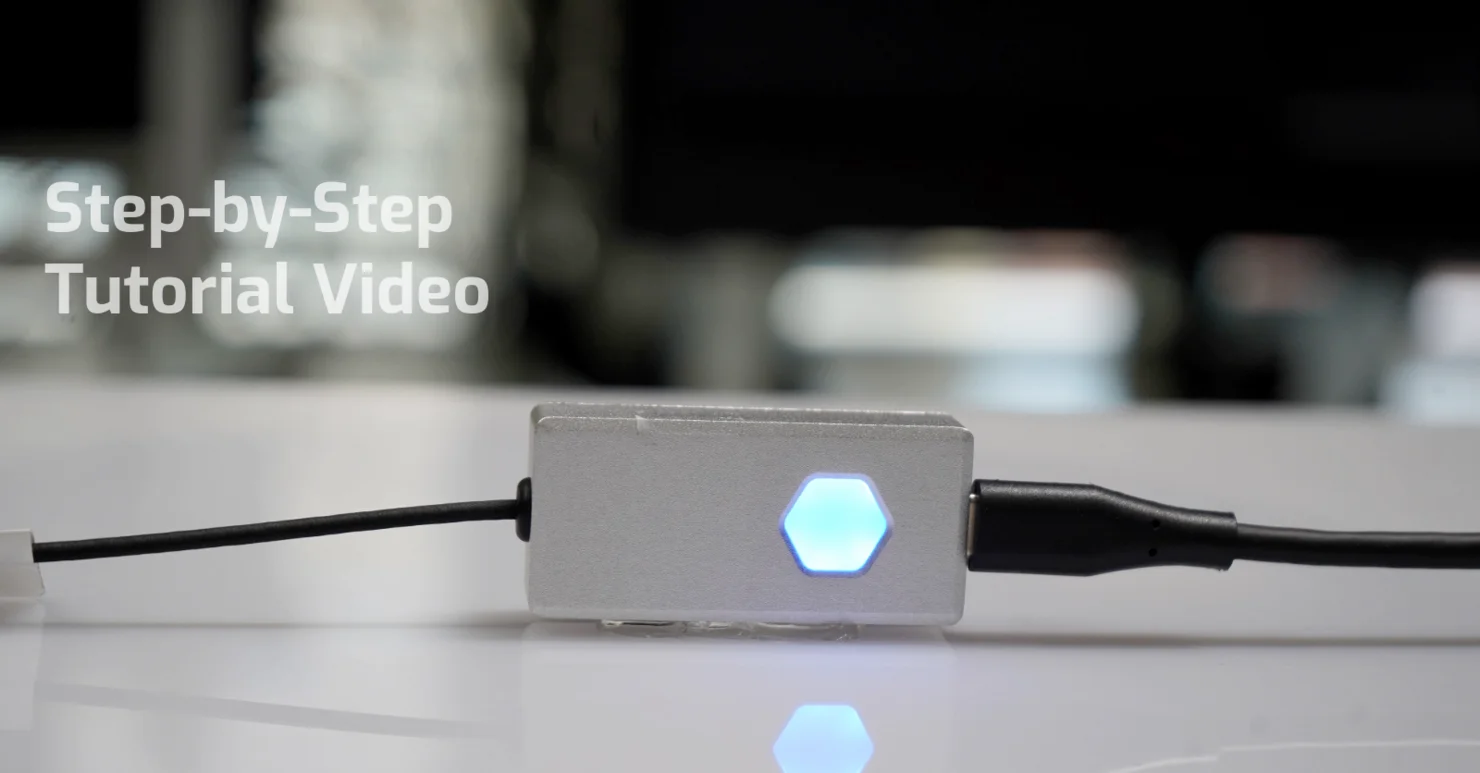
Supporting Various Interfaces
Resense sensors support USB, UART, and optional EtherCAT connectivity for straightforward integration into research and industrial environments.
We also partner with Olive Robotics to enable seamless ROS 2 integration, providing low-latency data communication and plug-and-play usability for robotic applications.
From prototyping to industrial automation, Resense offers the interfaces needed to connect force sensing directly to your system.


Using Resense F/T Sensors

Each sensor has a nominal measurement range and an overload capacity of approx. 300 %. Beyond this point, irreversible deformation occurs, and the output can no longer be guaranteed within our specifications.
Note: This applies also to transient forces. There is no mechanical protection against overload. Overload events can be checked via the diagnostics of the Mini-Electronics. If you suspect an overload, please contact your sales representative for further steps.

The FPC is a delicate component. To ensure safe senor handling, the FPC must not be strongly pulled in a lateral or the upper direction while the sonsor body is fixed with screws. Otherwise, the load is applied to the base os the FPC, and the wiring on the FPC might snap.
Also, do not mount the product on moving parts that are bent repeatedly.

Resense 6-axis F/T sensors can be easily integrated by using its screwholes at the top and the bottom.
Precautions: Do not fully tighten one screw first. This creates an uneven preload and mechanically distorts the sensing structure. As a result, the sensor may output incorrect force/torque values or even suffer permanent damage.

Contact Us
Is there anything you'd like to know about our F/T sensors? Do you require personal advice? If so, please contact us directly. We look forward to hearing from you!